
She Came to Stay
The desire to live without boundaries leads, paradoxically, to emotional entanglements.
.jpg)
»Have you ever felt in your inmost being, the conscience of others?«
An Introduction
Set in Paris on the eve of World War II, the novel follows Françoise, a young writer, whose relationship with her partner Pierre, a theatre director, begins to fracture when they become involved in a ménage à trois with the young Xavière. What starts as an experiment in openness and intellectual freedom gradually turns into a tense unstable emotional triangle.
Simone de Beauvoir

Simone de Beauvoir was born in Paris in 1908 into a conservative bourgeois Catholic family. She grew up highly educated and early on rejected religion and the traditional role of women.
Early on she decided she wanted to become a writer and intellectual. She studied philosophy at the Sorbonne in Paris, where she established herself as one of the most gifted students. In 1929 she passed the agrégation in philosophy, one of the most difficult academic examinations in France, at only 21 years old.
During her studies she met Sartre and the two formed what would become one of the most famous intellectual relationships of the 20th century. Their partnership was built around existentialist ideas of freedom and rejection of traditional values. They rejected marriage, monogamy and developed their own model of a romantic and intellectual partnership. In later years, both would also become associated with controversial positions around sexual freedom in France, alongside figures such as Foucault, in discussions concerning the lowering of the age of consent.
The 1930s in France were politically tense and volatile. Fascism was rising across Europe, economic instability shaped the daily life and a possibility of another war hovered constantly in the background. Tensions reached a breaking point when World War II began and Germany occupied France in 1940.

In 1932, while working as a teacher, Beauvoir became involved with the 17 year old Olga Kosakiewicz, a young student of Ukrainian background. Olga and her sister Wanda would later become two of the primary inspirations for the character of Xavière in She Came to Stay.
Beauvoir began writing her first novel She Came to Stay in the late 1930s. Before that she also wrote letters and diaries, including material relating to the triangle between Beauvoir, Sartre and Kosakiewicz. The book was published in 1943 during the Nazi occupation of France.
Both Beauvoir and Sartre entered relationships with young women throughout the 1930s and 40s, often former students of Beauvoir. She worked at schools across France before being suspended because of accusations involving inappropriate relationships with female students, the same year her debut novel got released. She wrote her first philosophical essay on existentialist ethics a year later.
That were all the essentials we need to know before going into this novel. Decades later Beauvoir would become one of the central figures of modern feminism and women’s liberation and she remains one of the most influential feminist thinkers to this day.
Ménage ahh trois
I read She Came to Stay because I wanted to read something Beauvoir, but not necessarily straight her major philosophical works. I wanted something fictional, where the ideas are embedded in the story itself like in Nausea by Jean Paul Sartre. So after finishing Nausea I picked this book at random because the cover was nice. It sat on my shelf for two years untouched, until I finally got around to it.
This book is a long dense brick. I took much longer with it than expected and I would honestly place it in the category of horror books that are not technically horror because it is so emotionally draining. The writing style feels like one endless conversation and I actually loved that about it at first.

»What is this, hash? Xavière asked with a delighted look.«
The characters are all deeply flawed and feel painfully human. You could almost think they were inspired by real people! Ironically my older edition still claims Beauvoir voluntarily gave up teaching in order to focus on her writing career.
Characters who seemed like decent human beings slowly reveal themselves to be contradictory and insecure. These are people who speak the language of freedom, yet the moment desire and jealousy enters the room, those principles fade. With time Françoise realizes she barely recognizes Pierre anymore. Once Xavière appears, something in him shifts. He becomes less the composed thinker and more someone obsessive, almost unhinged.
Power is the core of this novel. It is present in every interaction. Pierre, whenever wounded or frustrated, repeatedly seeks to reassert his control over Xavière. Françoise does the same in subtler ways. This supposed liberated arrangement, this grand experiment in freedom, is built on an obvious hierarchy. The rhetoric may be open minded, but the structure underneath is as old as ever.
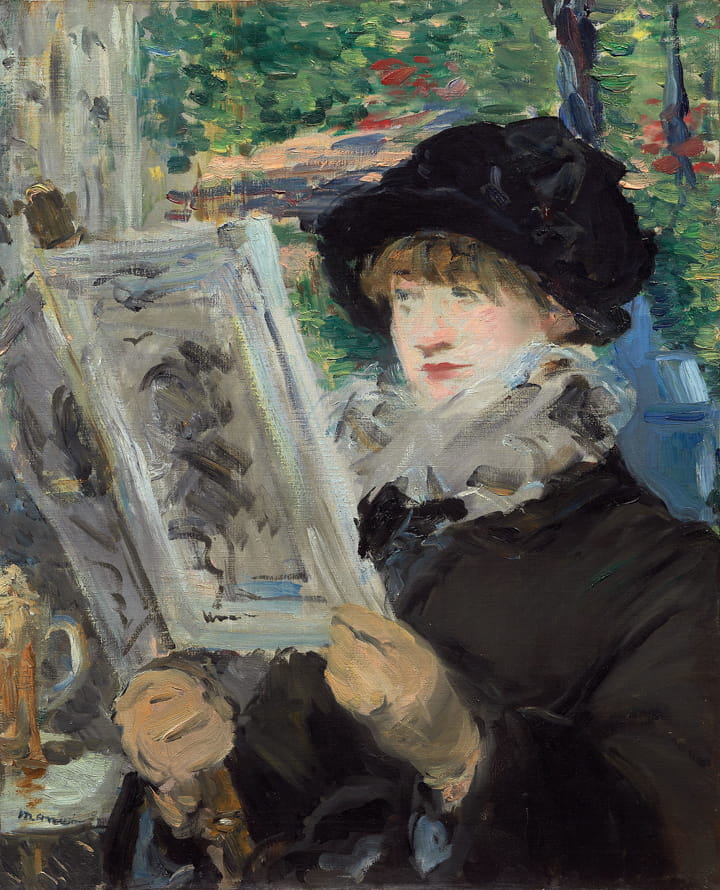
The novel is written as an act of revenge against Olga Kosakiewicz, the young woman who came between Beauvoir and Sartre. If you want to play hobby psychologist, Xavière shows a lot of manic pixie gf traits that today would be associated with borderline personality disorder. Self destructive behaviour, drug abuse, extreme emotional swings, impulsiveness, instability, fear of abandonment.
But even then, you can’t put the blame on her the way the novel often does. She is still basically a teenager. The adults in this situation are Pierre and Françoise and neither of them behaves responsibly. They manipulate her nonstop and then act shocked when it escalates.
Which also makes the novel an interesting case of the unreliable narrator, because the emotional reality of Xavière is constantly filtered through Françoise’s obsessive love hate fascination with her. Xavière is pushed to the brink. By the end, she is described as consumed and used up.
»I’m worn out.« »You only imagine that.«
The moments where the perspective shifts to Elisabeth, Pierre’s sister, are worth mentioning. Because suddenly we see these characters from the outside and it becomes clear that Beauvoir was aware of how all of this might appear to others. The older intellectual couple taking in a younger woman does not look innocent.
Which raises an important question: if she knows how this looks, what is the book really arguing for? Individual freedom over freedom in love? Or is it just retrospective slander over an ex.

Françoise’s breakdown and the hospital section were difficult to read. Because even there, no peace is possible. Even in a space meant for recovery, the emotional chaos continues.
Sex plays no huge part, there are sensual moments, certainly. Françoise often comments on Xavière’s body, in ways that become intensely intimate, especially in scenes involving alcohol or nights out dancing. As can be seen from her letters, Beauvoir wasn't shy about recounting her affairs to Sartre in detail. Like Pierre and Françoise in the novel, the two had a pact of transparency, so no room for secrets. This is also where the novel diverges from the events that inspired it. In real life, Beauvoirs relationships with girls were not treated with the distance that the novel adopts. Read with a more biased lens, you can start to notice what is softened and where things are left out entirely.
Instead, the novel focuses on emotional dependency. The one relationship that becomes more explicit later through Gerbert brings up the question of what any of these people actually want from one another. Love doesn't seem like the answer. Possession matters. The desire to win matters. The inability to let go.
.jpg)
The second half of the novel shows another painful truth: everything repeats itself. In variations. Small details change, everyone convinces themselves that this time it will be different, but the pattern remains. Again and again. That cyclical structure is brilliantly done, because toxic dynamics feel like that. Although honestly, you could also interpret parts of this repetition as debut novel syndrome. The message probably would have landed just as well in a shorter form.
And reading all of this through today's lens is a strange experience. The feminist Simone de Beauvoir feels very far away at times when reading. This book can be deeply sexist and weirdly racist in places. You can’t really excuse it with her being young either, she was already pushing 40 when the novel got released. At most, you can contextualise it in its time, yeah different times, that’s about as far as it goes. Pierre, as the obvious Sartre insert, does not exactly come out looking good either, but from Sartre you almost expect it. Every affair in this triangle leaves someone damaged behind, even though Sarte and Beauvoir get a happy ending.
The End!
If you’ve ever been in even vaguely similar situations, it might be genuinely interesting to read. I kept a reading journal and you need patience and willingness to sit with the same emotional patterns for a while.
And if you’re looking for something philosophical, this might be a bad entry point into existentialist literature. The ideas are there, around the Other and individuality, but they stay in the background. At the end this is really just a very personal story.


