
The Gambler
One turn of the wheel, and everything changes.
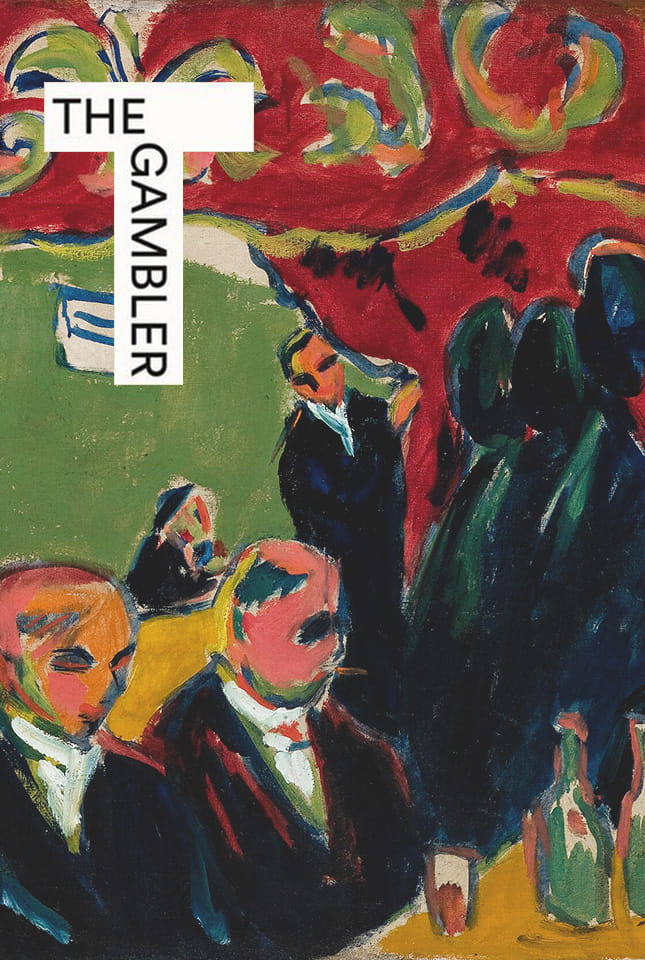
»But gamblers know how a man can sit for almost twenty-four hours at cards, without looking to right, or to left.«
An Introduction
A young private tutor from Russia arrives in a German resort town with the family he's working for, only to find himself drawn into a world of money, desire and gambling. As the casino becomes an increasingly central part of his life, everything begins to fall apart... or will he hit jackpot?
Fyodor Dostoevsky
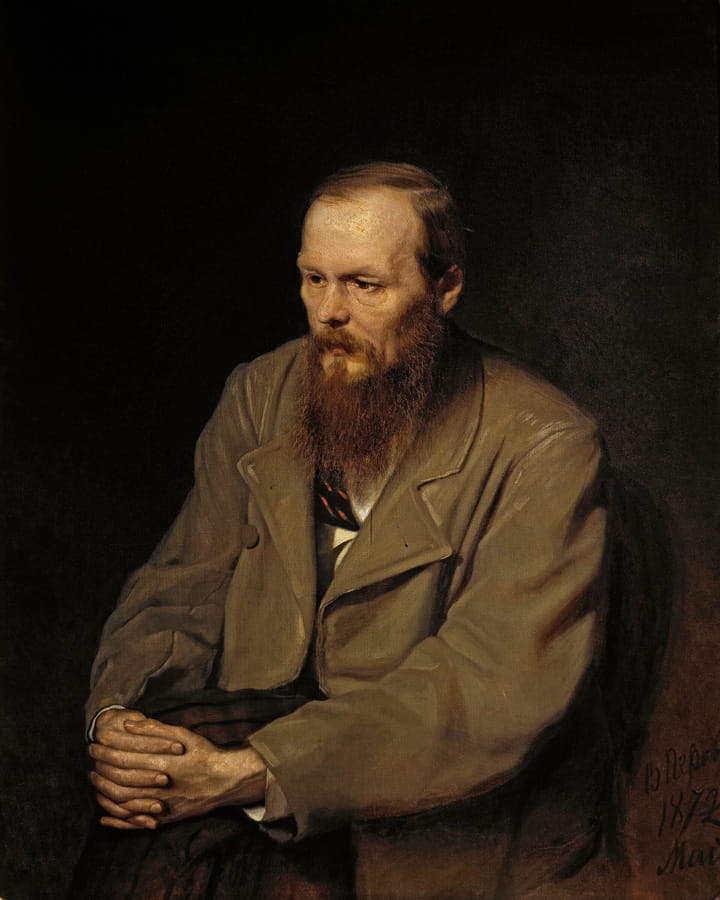
Fyodor Mikhailovich Dostoevsky was born in Moscow in 1821 and died in Saint Petersburg in 1881. He was the second son of a doctor dad at a Hospital for the Poor and a mom who came from a wealthy Moscow merchant family. He began writing from an early age, eventually abandoning his military career to pursue literature.
In 1849, Dostoevsky was arrested for his involvement with the Petrashevsky Circle, a group influenced by socialist revolutionary ideas. He was sentenced to death and brought before a firing squad, only to learn at the last moment that the execution had been a prank and that his sentence had been commuted to imprisonment and forced labour in Siberia. After his release in 1859, he gradually returned to writing.
He founded literary journals with his brother, but their second journal, Epocha, eventually collapsed under debts in 1865. Dostoevsky escaped on a trip to Europe to flee his creditors.

During a 1863 trip through Europe, he discovered roulette in Wiesbaden, Germany and became fascinated by the game. Matter fact, he became addicted to it. He later visited the casino in Baden-Baden with Apollinaria Suslova. His toxic relationship with her would later become the inspiration for Polina in The Gambler.
»I leave the Kurhaus, feel my clothes, and there is still one gulden in my waistcoat pocket. So I can still have lunch, I think. But I have hardly gone a hundred steps when I change my mind and turn back.«
In 1865, after the collapse of Epocha, he sold the rights to his future works to the publisher Fyodor Stellovsky for 3,000 roubles. Only 175 roubles remained for his journey and for gambling. He was required to deliver a novel of at least ten printer's sheets by the end of October 1866, under the threat of losing extensive rights to his future work. When he signed his contract with Stellovsky, he had not written a single line yet.
.jpg)
He hired the 20 year old stenographer Anna Grigoryevna Snitkina and dictated the novel to her in just 26 days. When Stellovsky left Saint Petersburg before the deadline, apparently making delivery impossible, Anna deposited the manuscript with a notary. The deadline was met, thanks only to her. The collaboration brought Dostoevsky and Anna closer together. Only days after finishing the novel, he proposed to her.
The Gambler was published in 1867, shortly after Crime and Punishment, as part of Stellovsky's first collected edition of Dostoevsky's works. It was his only novel that was not originally published as a serial.
The gamer
I decided to go for something short and ended up with The Gambler. The book is like a charade. It describes gambling addiction without ever really being able to name it, because the term doesn't exist yet.
In the beginning, our main character Alexei Ivanovich is not even introduced to us by his name. We mostly know him as the private tutor of a big family and as someone who gambles. Some people encourage him to play, while others are very clear that you should never give this man money because it will only disappear.
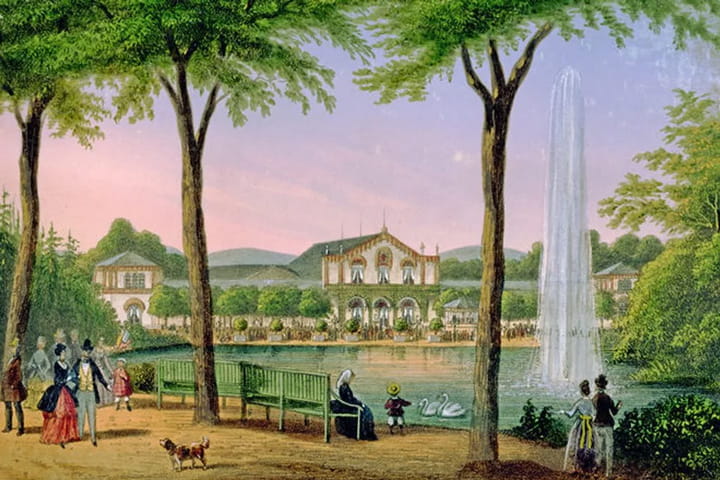
There are a lot of colorful characters in the novel. Babushka obviously stands out the most, but we also have Polina, the General, the english Mr. Astley and french Madame Blanche. They all have completely different personalities and intentions, but everyone seems to be after the same thing: money. Babushka initially seems to stand above all of that. She is not really interested in money in the same way as the others, because she's already rich. She is simply curious about roulette, because in russia its forbidden. And then she starts playing, wins quite a bit and is all in invested from one moment to another.
I also liked how the novel shows different kinds of gamblers. Babushka observes a young man who is completely lost in the game, almost in a trance, and she already knows that he is going to lose everything. At the same time, she notices a young woman who plays for exactly one hour every day. She is also a gambler, but in a much more controlled way.
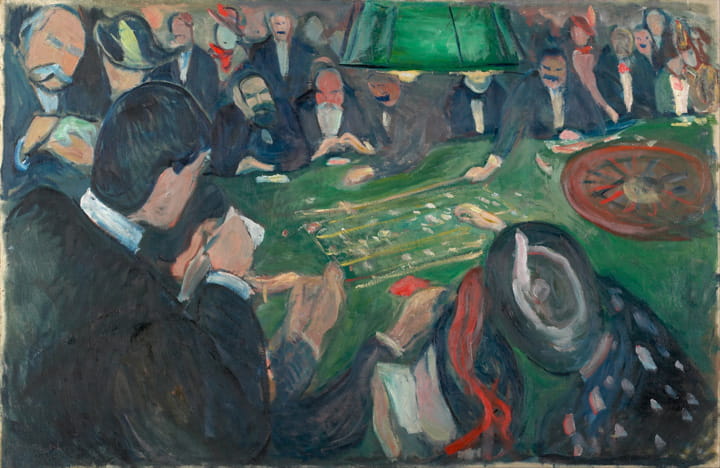
But from the gambler's perspective, there is really only one choice: everything or nothing. There is also never really an ending. Even when Alexei knows that he should stop, his brain keeps telling him: next time, more. At some point, it isn't even about the money anymore. Alexei wins a huge amount, but what really seems to matter is what people talk and think about him.
»No, it was not the money that I valued — what I wanted was to make all this mob of Heintzes, hotel proprietors, and fine ladies of Baden talk about me, recount my story, wonder at me, extol my doings, and worship my winnings.«
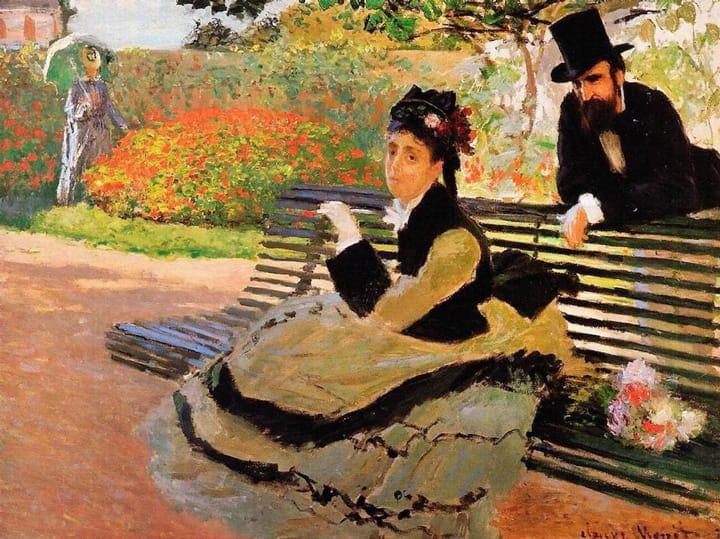
We only experience everything through Alexei and there are quite a few time skips. Very effective to make the story shorter. We suddenly find ourselves somewhere else, with Alexei telling us losely what happened in between. We have to fill the gaps ourself. Even the question of who gets him out of prison is left completely open, because maybe it doesn't matter for the plot.
At the beginning, Alexei's thoughts about the game are extremely detailed. He explains what he is betting on, why he thinks certain outcomes are more likely and how he reads the table. I enjoyed how he explained the possibilities, even though we as a reader know that it is bullshit. Towards the end, those descriptions become much vaguer. He simply says that he put money here or there and then lost everything or won everything. It feels like the thought process is disappearing as the addiction takes over.
What I found interesting is how funny the book is for most of its runtime. There is something theatrical about all these people running around, constantly talking about money, inheritance, marriage and roulette. It isn't really tragic for most of the book, with exception of some characters losing their shit. And then, in the final chapter, the whole thing suddenly changes. The tone becomes much darker almost immediately.
There is Mr. Astley, who acts as the reality check. Instead of leaving everything for the reader to figure out, Dostoevsky gives Alexei someone who can actually tell him what he is doing wrong. Dostoevsky is very aware of the problem he is writing about. Or maybe he simply looked at the deadline and thought: alright, let's be done with it.
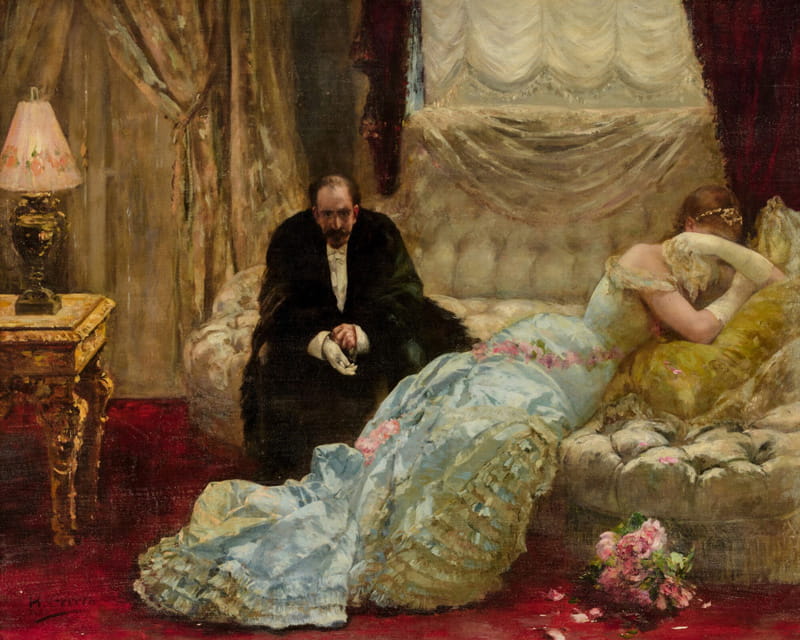
Alexei had spent all this time accumulating money just to throw it away. He doesn't even really enjoy the time he has with it. So he's just doing it for the love of the game. That might actually be the saddest part of the story, because a hobby could've prevented that.
And I think it works especially well for younger readers. Like gangster movies that show you that being a gangster isn't actually cool. It shows you how much fun it can be, the appeal, how exciting it feels, why people keep doing it and that you will end up dying alone.
The End!
You can easily read it on a train ride there and back. The writing is lively, the characters are memorable and the whole thing moves quickly. The book still works so well today and feels timeless because we are still dealing with the same, but worse.


